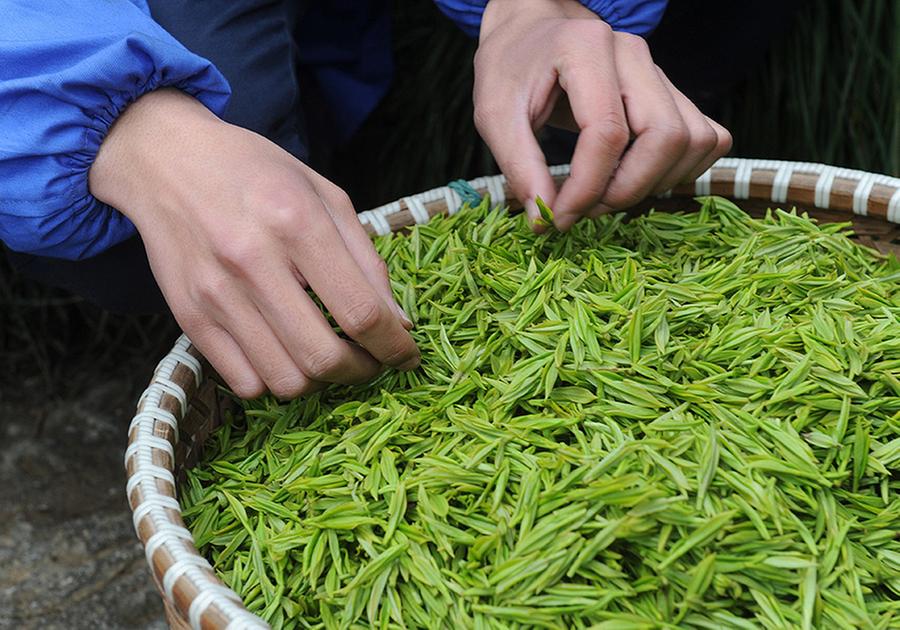
West Lake Longjing Tea
Introduction
West Lake Longjing Tea, also known as Dragon Well tea, is one of the most renowned green teas in China. It is produced exclusively in the West Lake area of Hangzhou, Zhejiang province. The tea is celebrated for its distinctive appearance, fresh aroma, mellow taste, and beautiful shape. Historical records indicate that West Lake Longjing has been highly prized since the Tang Dynasty (618-907) and gained popularity during the Song Dynasty (960-1279). Its reputation as a tribute tea during the Qing Dynasty (1644-1911) signifies its importance in Chinese tea culture.
History and Cultural Significance
West Lake Longjing Tea boasts a rich history, with references dating back to the Tang Dynasty in Lu Yu's The Classic of Tea, which is the world's first book dedicated to tea. The cultivation and production techniques improved significantly over the centuries, particularly during the Yuan Dynasty (1271-1368), which saw enhancements in quality. By the Ming Dynasty (1368-1644), Longjing tea had become a common beverage, and during the Qing Dynasty, it was often presented as a tribute to the imperial court.
The tea is intricately woven into the cultural fabric of China, with its production techniques recognized as a national-level intangible cultural heritage in 2008. This recognition highlights the traditional methods used in its production, which are centered around manual skills passed down through generations.
Cultivation and Production
West Lake Longjing Tea is cultivated in the mountainous regions surrounding Hangzhou's West Lake. The tea is grown on hillsides, which provide an ideal environment due to the region's climate and soil conditions. The tea picking season is a highly anticipated time in the Yangtze River basin, marking the beginning of spring. The highest quality Longjing tea is harvested before Qingming in early Apri, a period known as "Mingqian", which is characterized by its premium quality.
The processing of West Lake Longjing Tea is an art that involves several key steps. The fresh leaves are first spread out to wither slightly, which reduces their moisture content. They are then pan-fired at high temperatures, a step that requires precise control to ensure the leaves do not burn. This panning process is essential for halting oxidation, which helps to lock in the tea's natural flavors and aromas.
The final step involves shaping the leaves by hand, which gives West Lake Longjing its signature flat, smooth appearance. The entire process, from picking to the final product, reflects a deep respect for tradition and a dedication to quality that has been preserved over centuries.
Challenges and Modern Adaptations
While traditional methods are still cherished, the use of machines in processing has become more common due to the labor-intensive nature of hand-panning. Machines offer efficiency and speed, but they often compromise the quality that defines West Lake Longjing Tea. Skilled tea masters like Fan Shenghua continue to advocate for manual processing to uphold the tea's integrity.
The challenge of passing down these traditional skills to younger generations is significant. Many young people are reluctant to endure the hardships associated with manual processing. However, efforts are being made to teach these skills through apprenticeships and educational programs, ensuring the continuation of these time-honored practices.
Economic Impact and Global Recognition
Beyond its cultural significance, West Lake Longjing Tea has substantial economic value. The tea is highly prized in both domestic and international markets, with handmade varieties commanding higher prices due to their superior quality. The global recognition of West Lake Longjing Tea contributes to the economic vitality of the Hangzhou region, attracting tourists who seek to experience its cultivation and savor its unique flavors.








